
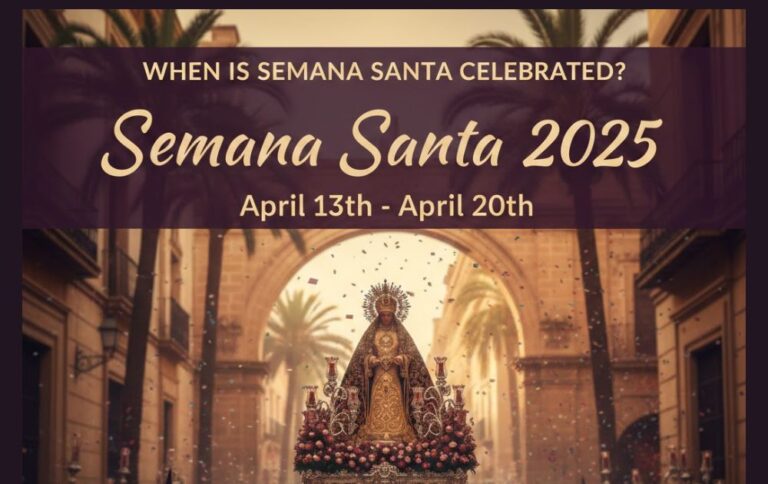
Semana Santa 2025 begins on Sunday, April 13, and ends on Sunday, April 20. Mark your calendar. This guide gives you everything, the exact dates, the profound traditions, and the practical travel tips you need to understand or experience this powerful week.
Holy Week is more than a religious observance. It’s a cultural spectacle that transforms streets from Spain to Peru into living theatre. If you’re planning a trip, seeking cultural understanding, or just curious about the dates, you’ve come to the right place. Let’s dive in.
Semana Santa 2025 At a Glance
Get your key facts straight from the start. This is the core information everyone searches for.
- Semana Santa 2025 Dates: April 13 – April 20, 2025.
- Palm Sunday (Domingo de Ramos): April 13, 2025
- Maundy Thursday (Jueves Santo): April 17, 2025
- Good Friday (Viernes Santo): April 18, 2025
- Holy Saturday (Sábado de Gloria): April 19, 2025
- Easter Sunday (Domingo de Resurrección): April 20, 2025
- Public Holiday Status: Yes. Most of Spain and Latin America closes down from Thursday to Sunday. Expect banks, offices, and many shops to be shut.
- Main Locations: Deeply celebrated in Spain, Mexico, Guatemala, Colombia, Peru, and the Philippines.
What Is Semana Santa? Understanding Holy Week
It’s the Christian commemoration of the Passion, Death, and Resurrection of Jesus Christ. The name translates directly to “Holy Week.” For millions, it’s the most important week of the liturgical year, blending deep faith with centuries-old local customs.
Why the Date of Semana Santa Changes Every Year
You might wonder why Semana Santa is celebrated on different dates each spring. It’s not random. The date follows a lunar calculation established by the Council of Nicaea in 325 AD. Easter Sunday falls on the first Sunday after the first full moon following the March equinox. This places it between March 22 and April 25. All other Holy Week dates hinge on this.
In 2025, that full moon lands on Saturday, April 12, making the following day, April 20, Easter Sunday. Count backwards, and you have your Semana Santa 2025 calendar.
Why Semana Santa Is Important: More Than a Festival
Semana Santa is important because it sits at the very core of Spanish and Latin American identity. It’s not just a religious event or a tourist spectacle. It is the beating heart of community, history, and culture for millions. Understanding its importance means looking beyond the robes and processions to the deeper forces at work.
This is a week where faith, art, tradition, and public life fuse into something unforgettable. Its significance is layered, and it resonates on multiple levels.
Semana Santa 2025 Calendar: A Day-by-Day Guide
Understanding each day’s significance transforms you from a spectator into a participant. Here’s what happens during the eight days of Holy Week.
Palm Sunday (April 13): The Joyful Entry
The week opens with remembrance of Jesus’s entry into Jerusalem. Churches bless palms and olive branches. Worshippers carry these palmas in cheerful processions, a stark contrast to the solemnity that follows.
Holy Monday, Tuesday & Wednesday (April 14-16): Deepening Reflection
These quieter days focus on scripture and preparation. In many towns, smaller, more intimate processions begin. Holy Wednesday, sometimes called Spy Wednesday, recalls Judas’s betrayal. In some Andalusian villages, you’ll hear haunting saetas (flamenco laments) sung from balconies for the first time.
Maundy Thursday (April 17): The Last Supper and Darkness
The mood pivots. Daytime masses commemorate the Last Supper and the washing of feet. At night, the most iconic processions emerge, representing the agony in Gethsemane. Church bells fall silent after the Misa de la Cena del Señor. They won’t ring again until Easter.
A key tradition: In Spain, visiting Monumentos—elaborate altars of repose in seven different churches—on foot tonight is a common pilgrimage.
Good Friday (April 18): The Solemn Passion
This is the most solemn day. No masses are held. The focus is the Veneration of the Cross and the Passion narrative. Afternoon processions are profoundly slow and silent, often featuring the most revered image of the crucified Christ. The atmosphere is heavy, respectful, and breathtaking.
Traveler’s note: This is a national holiday almost everywhere. Public transport runs on severely reduced schedules.
Holy Saturday (April 19): The Silence and the Vigil
A day of waiting and quiet. The streets are still. The main event is the Easter Vigil after nightfall—a service starting in darkness, lit by individual candles, and culminating in the proclamation “He is risen!”
Easter Sunday (April 20): The Celebration of Resurrection
When is Semana Santa celebrated at its most joyful? Today. Easter Sunday bursts with light, music, and celebration. Processions are triumphant, statues of the Risen Christ glide through streets adorned with flowers, and church bells peal loudly again. Families gather for large feasts to break the Lenten fast.
The Heart of the Celebration: How Semana Santa Is Observed
The visuals of Holy Week are unforgettable. Here’s what you’re actually seeing.
The Processions: Nazarenos, Pasos, and Saetas
The processions are organized by cofradías (brotherhoods), some dating back to the Middle Ages.
- Nazarenos: The penitents in iconic conical hoods (capirotes). The hoods originally served to anonymize the penitent, focusing on prayer, not identity. Their robe colors signify their specific brotherhood.
- Pasos: The immense, ornate floats carrying wooden sculptures (imágenes). They are works of art, often centuries old. Dozens of costaleros carry them from beneath, moving in a synchronized, weighted shuffle you can feel in your chest.
- The Saeta: An unpracticed, raw flamenco cry of devotion sung from a balcony as a paso passes. Time seems to stop. It’s a spontaneous, chilling moment you must experience.
Key Symbols: Understanding What You See
- The Capirote (pointed hood): Symbolizes a point of contact with God, not to be confused with unrelated historical symbolism.
- Candles: The light of Christ. Processions are a river of flame after dark.
- Silence vs. Music: Drums and trumpets (cornetas y tambores) mark military-style orders in some regions. In others, only the sound of dragging chains or the shuffling of feet is heard.
Semana Santa in Spain: A Regional Tapestry
Spain’s regions offer distinct flavors of Holy Week.
| Region | Key Characteristics | Must-See Location |
| Andalusia | Drama, size, emotion. Massive pasos, huge crowds. | Seville’s Madrugá: The overnight processions from Thu to Fri morning are legendary. |
| Castile & León | Austerity, silence, gravity. Hyper-realistic sculptures. | Valladolid: The Museo Nacional de Escultura’s pieces parade; it’s like a moving art museum. |
| Murcia & Valencia | Flower offerings, fragrance, elaborate decorations. | Murcia: The Salzillo processions on Good Friday feature breathtakingly detailed Baroque sculptures. |
Semana Santa Across Latin America: Vibrant Traditions
When Semana Santa is celebrated in Latin America, indigenous and local cultures blend powerfully with Spanish roots.
Guatemala: Aromatic and Artistic
Antigua Guatemala is the global highlight. Here, the streets are carpeted with intricate alfombras (rugs) made of colored sawdust, flowers, and pine needles. Processions walk directly over them, destroying these hours-long works of art in a powerful metaphor for impermanence. The air is thick with incense and pine.
Mexico: Reenactments and Community
- Iztapalapa, Mexico City: Hosts one of the world’s largest passion play, with over 2 million attendees. It’s intense and communal.
- Taxco, Guerrero: Known for its barefoot, hooded penitents (encruzados) carrying heavy crosses and crawling over cobblestones by torchlight. The silence is profound.
Colombia and Peru: Solemnity and Syncretism
- Popayán, Colombia: Its white-clad, daytime processions are so precisely choreographed and historically preserved they’re UNESCO-listed. The atmosphere is one of dignified silence.
- Cusco, Peru: Witnesses the procession of El Señor de los Temblores (Lord of the Earthquakes), a dark-skinned Christ figure adorned with native ñucchu flowers, showing a clear blend of Andean and Catholic faith.
The Food of Semana Santa: A Delicious Tradition
Semana Santa’s cuisine tells its own story. Shaped by centuries of Lenten fasting rules—no meat on Fridays, and often throughout Holy Week—these dishes are a masterclass in making humble ingredients spectacular. This is food born of devotion and culinary ingenuity.
You don’t just eat these meals; you participate in a centuries-old tradition. Here’s what’s on the table and why.
The Flavors of Semana Santa: Traditional Foods
Lenten fasting rules shaped a unique cuisine. Meat is often replaced with fish, legumes, and bread.
- Torrijas: The ultimate Holy Week treat. Like Spanish French toast, bread is soaked in milk or wine, egged, fried, and drenched in honey or cinnamon syrup. It’s pure comfort food.
- Bacalao (Salt Cod): The star of Good Friday meals. Prepared a la vizcaína (with red pepper sauce) or in creamy croquettes.
- Potaje de Vigilia: A hearty, savory stew of chickpeas, spinach, and salt cod.
- Huevos de Pascua: Decorated chocolate eggs for Easter Sunday, especially for children.
Planning Your Visit: Semana Santa 2025 Travel Guide
Ready to go? Here’s the practical advice you won’t find in fluffy brochures.
When to Book & What to Expect
- Book Now: For Semana Santa 2025, hotels in prime locations (Seville, Antigua, Popayán) sell out 6-12 months in advance. Flight prices skyrocket 3-4 months out.
- Costs: Expect to pay 200-300% of the normal rate for accommodation. This is the highest season.
- Crowds: They are immense, especially from Thursday to Sunday. Patience is not a virtue; it’s a requirement.
Essential Etiquette for Watching Processions
This is sacred, not a performance. Your respect ensures you’re welcome.
- Silence Your Phone: During silent processions, a ringtone is a major offense.
- Never Touch a Paso or a Nazareno: It’s disrespectful and disrupts a deeply meditative act.
- Respect the Route: Never cut through a procession. Wait for a gap or go around the entire block.
- Dress Modestly: Think “smart casual.” Avoid beachwear or overly revealing clothing.
- Keep Children Close: The crowds are dense, and the atmosphere can be intense for little ones.
Public Holidays and Business Closures
Plan around these closures to avoid frustration.
- Spain: Official holidays nationwide on Thursday 17, Friday 18, and Sunday 20. Many regions also holiday on Monday 21 (Easter Monday).
- Mexico: Thursday 17, Friday 18, and Sunday 20 are federal holidays. Schools typically have a two-week break.
- Colombia: Thursday 17, Friday 18, and Sunday 20 are public holidays.
- General Rule: Assume all government offices, banks, and many non-tourist shops are closed from Thursday afternoon through Sunday. Supermarkets may have limited hours Saturday morning.
The Meaning of Easter After Semana Santa: From Mourning to Dawn
Semana Santa doesn’t just end; it resolves. The entire week is a carefully orchestrated emotional and spiritual journey that finds its purpose on Easter Sunday (Domingo de Resurrección).
If Holy Week is the solemn, passionate story of sacrifice, Easter is the explosive, joyful answer. One cannot exist without the other.
Semana Santa for Families
Engaging kids helps them appreciate the culture.
- Make Palm Crosses: Before Palm Sunday, find tutorials online.
- Bake Together: Try making simple torrijas or rosquillas (aniseed doughnuts).
- Alfombra Craft: At home, create small “carpets” using colored rice or paper on a table.
- Explain Simply: Focus on themes of kindness, sacrifice, and new beginnings appropriate to their age.
Frequently Asked Questions (FAQ)
What are the 7 days of Holy Week in 2025?
The core Holy Week runs from Palm Sunday to Holy Saturday: April 13, 14, 15, 16, 17, 18, and 19, 2025. Easter Sunday (April 20) is the celebration that follows.
Why is Easter on April 20, 2025?
Because the first full moon after the March equinox (March 20) is on Saturday, April 12. The following Sunday is April 20, making it Easter Sunday.
Is Semana Santa a public holiday?
Yes. In Spain and most of Latin America, Maundy Thursday, Good Friday, and Easter Sunday are official public holidays. Many places also observe Easter Monday.
Can tourists attend Semana Santa events?
Absolutely. All processions are public events in streets and squares. Remember to follow the local etiquette outlined above. Purchasing a balcony seat (balcón) from a local family or business guarantees a view but books up early.
What should I avoid doing during processions?
Do not talk loudly, laugh, or block the path of the costaleros (float carriers). Never try to take a selfie with a penitent. Stand respectfully and observe.

