
Introduction: When You Need to Say “Help!” in Japanese
Traveling to Japan or learning Japanese can be exciting, but there may be moments when you need help. In those situations, knowing the right word can make you feel safer and more confident. Learning how to ask for help is one of the most important parts of basic Japanese.
The word tasukete is the most common way to say “help” in Japanese. People use it in emergencies, daily problems, and even in light-hearted situations. Understanding the meaning and correct use of this word can help you communicate clearly when you need support.
In this article, you will learn the meaning of tasukete, how to use it correctly, and when it sounds natural in Japanese conversations. Whether you are a traveler, student, or beginner learner, this guide will help you use this essential word with confidence.
What Does “Tasukete” Mean in Japanese?
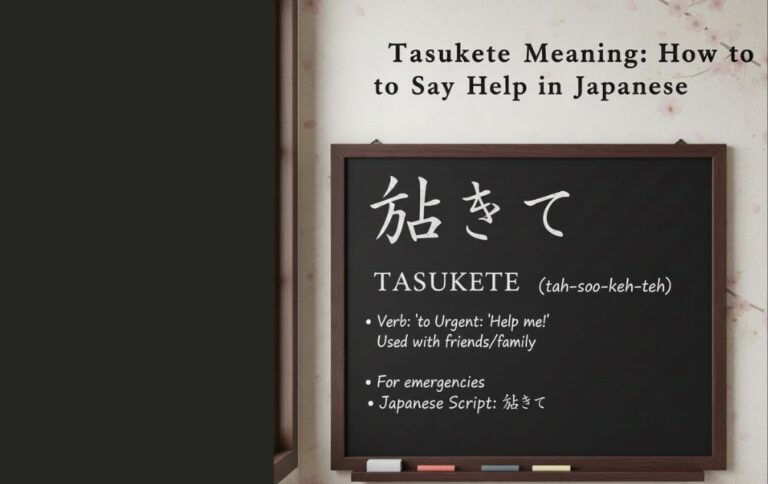
The tasukete meaning in Japanese is “Help!” or “Help me!”. It comes from the verb tasukeru, which means to help or rescue someone. As a result, tasukete in Japanese is used when a person needs support, guidance, or immediate assistance in real situations.
Moreover, the tasukete meaning in Japanese changes slightly based on tone and context. For example, it can show urgency during an emergency or sound softer in daily conversations. So, when people ask what tasukete means, the answer depends on how and when it is spoken.
Breaking Down “Tasukete”
- Kanji: 助けて, The kanji 助 means help or rescue, clearly showing the word’s purpose.
- Hiragana: たすけて, Used in casual writing and for beginner-friendly reading.
- Romaji: tasukete, Helpful for learners who cannot read Japanese scripts yet.
- Verb Origin: Comes from tasukeru (助ける), meaning to help or save someone.
- Grammatical Form: Imperative form, used to directly ask for help.
- JLPT Level: N5, A basic and essential beginner Japanese word.
- Core Meaning: “Help!” or “Help me!” depending on tone and situation.
When to Use “Tasukete” in Japanese Conversations
You can use tasukete in many situations, from serious emergencies to everyday help. For example, shout tasukete in danger, or politely say tasukete kudasai when asking someone for assistance. Using it correctly ensures others understand your needs clearly.
1. Emergency Situations
In urgent moments, shouting tasukete immediately grabs attention. It signals danger and asks for help clearly. People nearby can respond quickly, making tasukete essential in emergencies.
- Japanese: 助けて!犬に追いかけられています!
- Romaji: Tasukete! Inu ni oikakerareteimasu!
- English: Help! I’m being chased by a dog!
2. Asking for Assistance with Tasks
You can use tasukete politely when needing help with daily tasks. Adding kudasai makes it respectful, letting others know you need support without urgency. Tasukete works well for teamwork or simple favors.
- Japanese: このプロジェクトを完成させるのを手伝ってもらえますか?
- Romaji: Kono purojekuto o kansei saseru no o tasukete moraemasu ka?
- English: Could you help me complete this project?
3. In Playful or Exaggerated Contexts
Sometimes, tasukete is used humorously to show feeling overwhelmed. It’s common among friends or in casual situations, adding fun while still asking for help in a light-hearted way.
- Japanese: 部屋が散らかりすぎ!助けて!
- Romaji: Heya ga chirakari sugiru! Tasukete!
- English: My room is such a mess! Help!
Polite Forms and Variations of “Tasukete”
You can make tasukete polite by adding phrases like kudasai or itadakemasen ka. These forms show respect while asking for help. Using polite tasukete in daily life ensures smooth communication in both casual and formal situations.
Casual Form
- 助けて (tasukete) – Basic imperative form, used among friends or in emergencies.
- 手伝って (tetsudatte) – Casual way to ask someone to help with tasks or chores.
Polite Forms
- 助けてください (tasukete kudasai) – Standard polite form meaning “Please help me.”
- 助けていただけませんか (tasukete itadakemasen ka) – Very polite request、 “Could you please help me?”
- ご助力いただけませんでしょうか (go-joryoku itadakemasen deshō ka) – Extremely formal、 “Could I possibly receive your assistance?”
Related Expressions
- 手伝って (tetsudatte) – “Help me” or “Assist me” in casual situations.
- 助かります (tasukarimasu) – “That would be helpful” or expressing gratitude for help.
- 助けが必要ですか? (tasuke ga hitsuyō desu ka?) – “Do you need help?”
- 大丈夫ですか? (daijōbu desu ka?) – “Are you okay?” – often used when offering support.
Cultural Context: The Japanese Approach to Asking for Help
In Japanese culture, directly asking for help can sometimes feel imposing. People often hesitate before saying tasukete, even in urgent situations. Understanding this cultural nuance helps you use tasukete appropriately and respond thoughtfully when someone asks for assistance.
Additionally, the tone and delivery of tasukete carry meaning beyond words. A soft, polite request shows respect, while a loud, urgent shout signals danger. Recognizing these differences helps you interpret the situation correctly and communicate effectively in both casual and emergency contexts.
Practical Usage Examples of “Tasukete”
You can use tasukete in public, at work, or in emergencies. Practicing real situations helps you respond naturally and confidently, making tasukete a useful word in daily Japanese conversations.
In Public Places
- Japanese: この駅に行きたいのですが、助けてください。
- Romaji: Kono eki ni ikitai no desu ga, tasukete kudasai.
- English: I want to go to this station. Please help me.
At Work or School
- Japanese: 宿題を終わらせるのを助けてください。
- Romaji: Shukudai o owaraseru no o tasukete kudasai.
- English: Please help me finish this homework.
In Emergency Situations
- Japanese: 助けて!火事です!
- Romaji: Tasukete! Kaji desu!
- English: Help! There’s a fire!
Learning “Tasukete” in Context with Other Japanese Expressions
Using tasukete alongside other common phrases makes communication smoother. Pairing it with expressions like daijōbu desu ka? or nani ga arimashita ka? helps you respond appropriately in emergencies or daily situations. Practicing these combinations strengthens your understanding of natural Japanese conversation.
- 大丈夫ですか? (Daijōbu desu ka?) – “Are you okay?”
- 何かありましたか? (Nani ga arimashita ka?) – “What happened?”
- 助けが必要ですか? (Tasuke ga hitsuyō desu ka?) – “Do you need help?”
- お手伝いしましょうか? (O-tetsudai shimashou ka?) – “Shall I help you?”
Tips for Remembering “Tasukete”
Learning tasukete becomes easier with regular practice. Using it in real situations helps your memory. Visualizing someone asking for help can make the word stick naturally.
- Practice with role-play scenarios to simulate asking for help.
- Associate tasukete with visual cues, like someone reaching out a hand.
- Connect the kanji 助 (help/rescue) with its meaning.
- Use tasukete in daily situations, even in practice settings.
By following these strategies, you’ll remember tasukete more easily. Consistent practice and real-life usage make it a natural part of your Japanese vocabulary.
Common Questions About “Tasukete”
Is “tasukete” only used in emergencies?
No, tasukete can be used in emergencies and everyday situations. Tone and context determine urgency, from serious danger to simple requests for help.
What’s the difference between “tasukete” and “tetsudatte”?
Tasukete implies a stronger need for help, often emergencies, while tetsudatte is casual and used for assistance with tasks or chores.
How do I respond when someone says “tasukete” to me?
You can ask どうしましたか? (Dō shimashita ka?) meaning “What happened?” or immediately offer help with 何をすればいいですか? (Nani o sureba ii desu ka?)
What is the most formal way to ask for help in Japanese?
The most formal form is ご助力いただけませんでしょうか (Go-joryoku itadakemasen deshō ka), politely asking, “Could I possibly receive your assistance?”
Can “tasukete” be used playfully?
Yes, tasukete can express being overwhelmed humorously among friends, such as with homework or chores, showing emotion without a serious emergency.
Conclusion: Making “Tasukete” Part of Your Japanese Vocabulary
Mastering tasukete is essential for anyone learning Japanese. It allows you to ask for help in emergencies, daily tasks, or even playful situations. Understanding its polite forms and cultural context ensures respectful and effective communication.
Practicing tasukete alongside related expressions, like daijōbu desu ka? or tetsudatte, helps you respond naturally in conversations. Visualizing scenarios, role-playing, and consistent use make the word easier to remember. By adding tasukete to your vocabulary, you not only gain a practical phrase but also deepen your insight into Japanese culture and communication styles.

