
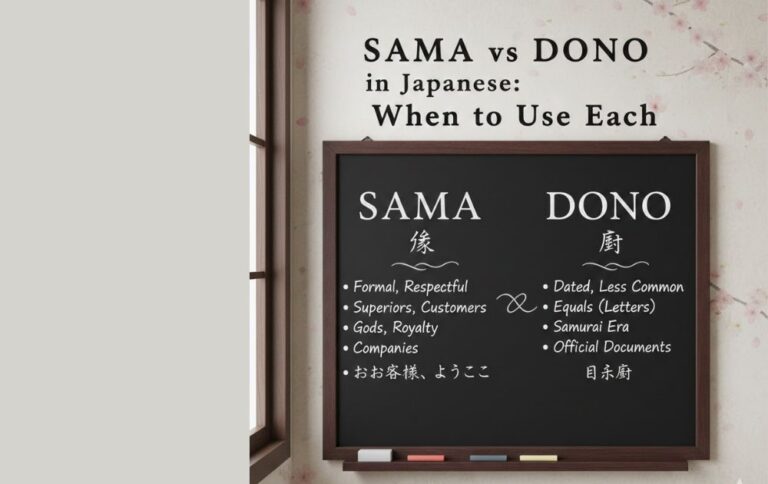
The Japanese language has many honorifics, and sama vs dono are two of the most respectful ones. Knowing the difference helps you speak politely and show proper respect. Sama japanese is common today, while dono meaning japanese has a historical feel, mostly used in formal or traditional settings.
Using the right honorific shows cultural awareness. Sama vs dono is not just about words, it reflects social hierarchy and relationships. Learners often confuse them, but understanding when to use sama japanese or dono meaning japanese can prevent mistakes and make your Japanese sound natural and respectful in daily life, business, or historical contexts.
The Respectful World of Japanese Honorifics
Japanese culture values respect and social order, which is reflected in Japanese honorifics. From basic forms like -san to high-level titles such as sama japanese and dono meaning japanese, these suffixes show the speaker’s awareness of hierarchy. Learning them helps you communicate politely and understand Japanese social hierarchy clearly.
In everyday life, choosing the right honorific matters. For example, sama japanese is used for customers or deities, while dono meaning japanese appears in formal letters or traditional arts. Understanding high-level Japanese honorifics allows learners to navigate both modern and historical contexts, demonstrating respect and cultural awareness naturally in conversations.
Sama: The Ultimate Modern Honorific
Sama japanese is a highly respectful honorific used in modern Japan. It shows vertical respect and politeness, often for customers, deities, or nobility. By using high-level Japanese honorifics like sama japanese, speakers demonstrate proper etiquette and cultural awareness in daily and formal settings.
When to Use Sama
You should use sama japanese when showing the highest respect. It highlights vertical respect in Japanese honorifics and is common in formal, religious, or business situations, helping speakers communicate politely and professionally.
Common situations to use Sama:
- Addressing deities or spiritual figures, e.g., Kami-sama
- Speaking to customers in shops or restaurants, e.g., Okyaku-sama
- Writing formal letters, e.g., Tanaka-sama
- Referring to nobility or royalty, e.g., Hime-sama
Using sama japanese elevates the listener above the speaker. It emphasizes politeness and maintains proper social hierarchy in modern Japan.
Real-world example:
店員: いらっしゃいませ、お客様。何かお手伝いできますか?
Tenin: Irasshaimase, okyaku-sama. Nanika otetsudai dekimasu ka?
(Store clerk: Welcome, honored customer. How may I help you?)
Dono: The Historical Honorific of Equals
Dono, meaning japanese, is a traditional honorific with historical roots in feudal Japan. Unlike sama japanese, it conveys horizontal respect among peers, especially within the samurai class. By understanding historical Japanese honorifics like dono, learners gain insight into social hierarchy, cultural etiquette, and respectful communication in formal or traditional contexts.
The Historical Context of Dono
The dono meaning Japanese honorific originated in Japan’s feudal era, primarily among the samurai class. Unlike sama japanese, it expressed horizontal respect between individuals of similar status. Learning historical Japanese honorifics like dono helps understand social hierarchy, mutual respect, and communication in Japan’s traditional society.
When to Use Dono in Modern Japan
Although less common today, dono meaning japanese is still used in formal or traditional contexts. It shows horizontal respect among equals and conveys politeness in historical Japanese honorifics. Understanding when to use dono helps learners navigate formal letters, ceremonies, and historical references without sounding awkward.
- Formal written correspondence, e.g., Yamada-dono
- Traditional arts and ceremonies, e.g., Sōshō-dono for tea masters
- Legal or corporate documents, e.g., Daihyō torishimariyaku-dono
- Historical dramas or period pieces
Historical example:
武田: 上杉殿、この手紙をお読みください。
Takeda: Uesugi-dono, kono tegami o oyomi kudasai.
(Takeda: Lord Uesugi, please read this letter.)
Sama vs Dono: Key Differences in Modern Usage
When deciding between sama vs dono in modern Japanese, it’s important to keep these key differences in mind.
| Aspect | Sama (様) | Dono (殿) |
| Level of formality | Extremely high | Extremely high but archaic |
| Implied relationship | Vertical (up to recipient) | Historically horizontal |
| Common modern contexts | Customer service, deities, nobility | Formal documents, historical reference |
| Gender association | Gender-neutral | Traditionally male-oriented but technically neutral |
| Perceived modernity | Contemporary | Archaic/traditional |
Common Mistakes When Using Sama vs Dono
Learners often misuse sama japanese and dono meaning japanese, which can sound awkward. Overusing high-level Japanese honorifics or mixing them with casual speech breaks natural flow. Understanding proper context ensures respectful and accurate communication in both modern and historical settings.
- Using dono meaning japanese in customer service or casual situations
- Adding sama japanese or dono to your own name
- Overusing high-level Japanese honorifics, making speech sound unnatural
- Mixing formal honorifics with casual language
By avoiding these mistakes, you show cultural awareness and respect. Using sama japanese or dono meaning japanese correctly helps learners communicate naturally, maintain proper hierarchy, and appreciate the richness of Japanese honorifics.
When Neither Sama nor Dono is Appropriate
Sometimes, using sama japanese or dono meaning japanese is unnecessary. Choosing simpler Japanese honorifics keeps speech natural and polite in everyday situations.
- San (-さん) for general polite address
- Sensei (-先生) for teachers, doctors, or professionals
- Using the person’s name only in close relationships
- Referring by title only, e.g., Shachō for company presidents
Cultural Implications Beyond Language
The use of sama japanese and dono meaning japanese reflects deeper Japanese cultural values and awareness of social hierarchy.
- Shows historical consciousness and connection to Japan’s past
- Highlights hierarchical awareness in relationships
- Demonstrates contextual communication depending on situation
- Reflects respect and etiquette in daily and formal life
Understanding these cultural implications helps learners not only speak politely but also appreciate how Japanese honorifics reveal societal norms and traditional values.
Q&A: Common Questions About Sama vs Dono
What’s the main difference between sama and dono?
The main difference is that sama japanese shows vertical respect, elevating the addressee, while dono meaning japanese historically expresses horizontal respect between equals of high status.
Is dono more respectful than sama?
No, dono meaning japanese is not higher than sama japanese. Today, sama is considered the most respectful, while dono feels traditional or historical.
Can foreigners use sama and dono?
Yes, foreigners can safely use sama japanese in formal situations. Avoid dono meaning japanese unless in historical or ceremonial contexts to sound natural and respectful.
Do Japanese people still use dono in everyday speech?
Rarely. Dono meaning japanese is mostly used in formal letters, historical dramas, or traditional arts, while sama japanese is common in modern daily life.
When should I use sama over dono?
Use sama japanese for customers, deities, or nobility, and in business letters. Reserve dono meaning japanese for formal or historical contexts to show proper etiquette.
Conclusion: Navigating Sama vs Dono in Modern Japan
Understanding the difference between sama japanese and dono meaning japanese is essential for respectful communication in Japan. Sama vs dono reflects both social hierarchy and historical context. While sama japanese is common today for customers, deities, and nobility, dono meaning Japanese connects learners to Japan’s feudal past and traditional arts.
Using these high-level Japanese honorifics correctly shows cultural awareness and prevents mistakes. By mastering when to use sama vs dono, learners communicate politely, honor social norms, and appreciate deeper aspects of Japanese culture, making interactions natural, respectful, and meaningful in modern and historical contexts.

