
Many people pause while typing and wonder: is it allie or ally? The confusion feels small, yet it can affect clarity and credibility. I faced the same hesitation when writing about partnerships and social causes. So, let’s break down ally vs allie in a simple, practical way.
At first glance, both words sound identical. However, only one belongs in formal English dictionaries. If you’ve ever questioned ally or allie, this guide will remove every doubt and help you use the correct word confidently.
Read this: HGS Meaning in Text: What It Really Stands For and How People Use It Online
Define Ally
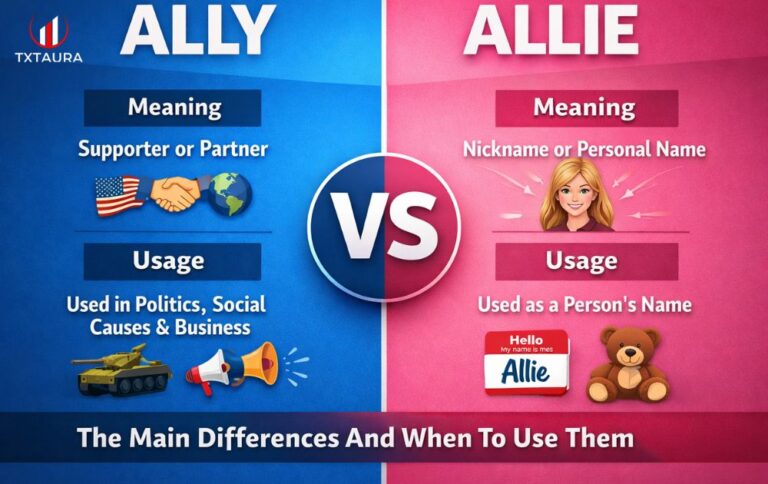
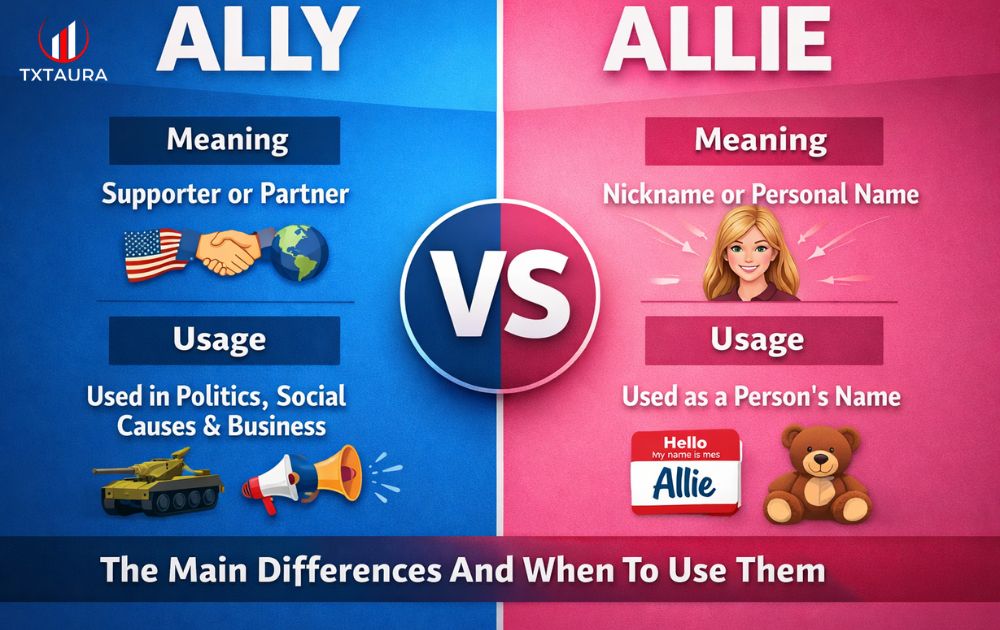
An ally is a person, group, or nation that supports another for a shared goal. The word functions as both a noun and a verb.
As a noun, it refers to a supporter. For example, a country can be an ally during war. The United States and the United Kingdom have long been allies in global conflicts.
As a verb, “ally” means to unite or partner with someone. A company may ally with another brand to increase market reach.
Beyond politics, the word appears in social justice discussions. A person who supports equal rights movements may identify as an ally of the LGBTQ+ community. In short, an ally stands beside someone in support, cooperation, or partnership.
If you ever stop and ask yourself how to spell ally, remember this: A-L-L-Y is the correct standard spelling in English.
Define Allie
Now let’s clarify what is an allie. Technically, “allie” is not a recognized standard English word. It is usually a misspelling of “ally.”
However, “Allie” can function as a proper noun. Many people use it as a nickname for Allison, Alice, or Alexandra. For instance, the television character in Ally McBeal made the name familiar, although the spelling there remains “Ally.”
When someone types “allie” in a grammar context, they usually mean “ally.” Therefore, outside of names, “allie” does not hold dictionary meaning.
How To Properly Use The Words In A Sentence
Understanding grammar rules makes writing clearer. So let’s explore how each word fits naturally into sentences.
How To Use “Ally” In A Sentence
Use “ally” when referring to support, partnership, or cooperation.
A business might form an alliance with another organization. Two nations may become allies after signing a treaty. An employee can be a strong ally in workplace negotiations.
Notice how the word always implies collaboration or shared purpose. If the meaning involves support or unity, choose “ally.”
Whenever you revisit ally vs allie, remind yourself that only “ally” works in these formal or professional situations.
How To Use “Allie” In A Sentence
“Allie” works only as a name. It does not describe support or cooperation.
For example:
- Allie is my childhood friend.
- I met Allie at a conference.
- Allie enjoys reading historical novels.
You should never substitute “allie” for “ally” in business, academic, or political writing. If the word describes partnership, stick with “ally.”
More Examples Of Ally & Allie Used In Sentences
Seeing examples in context strengthens understanding.
Examples Of Using “Ally” In A Sentence
- She became an ally in the fight for equal rights.
- The two companies allied to expand their market share.
- Canada remains a close ally of the United States.
- He found an unexpected ally during negotiations.
- The nonprofit group sought allies to increase awareness.
Each sentence highlights cooperation, advocacy, or partnership.
Examples Of Using “Allie” In A Sentence
- Allie loves painting landscapes.
- My cousin Allie lives in Chicago.
- Allie introduced herself confidently.
- Allie adopted a rescue dog.
- Everyone congratulated Allie on her promotion.
Here, the word clearly functions as a personal name.
Common Mistakes To Avoid
Grammar mistakes often happen because the words sound alike. Let’s correct them clearly.
Using “Ally” When You Mean “Allie”
Sometimes writers use “ally” as someone’s name by mistake. If you are referring to a person named Allie, capitalize and spell it properly.
For example, “I spoke to Ally yesterday” may be incorrect if her name is spelled Allie.
Using “Allie” When You Mean “Ally”
This mistake happens more frequently. Someone might write, “She is an allie of the movement.” That spelling is wrong.
In professional writing, always choose “ally” when discussing support. When you compare ally or allie, remember that “ally” carries the formal meaning.
If you explain allie or ally carefully, you’ll see that one is linguistic, and the other is personal.
Not Capitalizing “Ally” When Referring To A Specific Person Or Group
If “Ally” is a proper noun, capitalize it. Otherwise, keep it lowercase.
For instance:
I am meeting my ally.
I am meeting Ally.
The second sentence refers to a specific individual named Ally.
Tips To Avoid Making These Mistakes
- Double-check spelling before publishing.
- Use a dictionary if unsure.
- Read the sentence aloud to test meaning.
- Think about context first.
When you pause and check how to spell ally, you prevent embarrassing grammar errors.
Context Matters
Language depends heavily on context. Even simple words change meaning depending on usage.
Examples Of Different Contexts
In personal relationships, an ally is someone who supports you emotionally.
In business, an ally may be a partner company working toward shared goals.
In military language, an ally refers to nations fighting on the same side. For example, the United States and the United Kingdom acted as allies during global conflicts.
In casual conversation, “Allie” likely refers to someone’s name.
Therefore, when deciding between ally vs allie, always examine the situation first.
Exceptions To The Rules
Although rules are clear, a few exceptions exist.
Proper Nouns
When “Ally” or “Allie” appears as a name, spelling depends on personal preference. Some individuals spell their name Ally, others Allie.
Regional Variations
In standard English, “ally” remains the correct spelling in both American and British English. Regional differences rarely affect this specific word, though pronunciation may vary.
Slang And Informal Usage
Occasionally, people use creative spellings in informal texts. Social media may show “allie” used playfully. Still, formal writing requires correct spelling.
Practice Exercises
Testing yourself improves retention.
Exercise 1 – Fill In The Blank
My best friend is my ______.
The two nations became ______ after signing the agreement.
I met ______ at the seminar.
She became a strong ______ for workplace equality.
Answers: ally, allies, Allie, ally.
Exercise 2 – Multiple Choice
Choose the correct word.
She is an _____ in the fight for justice.
a) ally
b) allie
My sister’s name is _____.
a) ally
b) Allie
Correct answers: ally, Allie.
Conclusion
Understanding the difference between ally and allie protects your credibility as a writer. “Ally” describes partnership, support, and cooperation across political, social, and business contexts. “Allie” functions mainly as a personal name. Although the words sound identical, their meanings differ significantly. Always check spelling before publishing professional content. Context should guide your choice every time. When you carefully evaluate meaning, grammar becomes simple. Clear writing builds trust with readers, and mastering small distinctions like this strengthens your communication skills in powerful ways.
Key Takeaways
- Ally means supporter or partner.
- Allie is usually a personal name.
- Spelling affects meaning and clarity.
- Context determines correct usage.
- Proofreading prevents common grammar errors.
Is allie or ally correct?
“Ally” is correct when describing support or partnership. “Allie” is usually a personal name, not a standard English word for cooperation or alliance.
What is the difference in ally vs allie?
Ally refers to a supporter or partner. Allie functions mainly as a name. The meanings are completely different despite identical pronunciation.
How to spell ally correctly?
Spell ally as A-L-L-Y. This spelling applies in political, social, business, and general English contexts where support or cooperation is described.
What is an allie in English?
Allie is generally a nickname or personal name. It does not hold dictionary meaning related to partnership or support.
When should I choose ally or allie?
Choose “ally” for support or partnership contexts. Use “Allie” only when referring to a person’s name or proper noun.

