
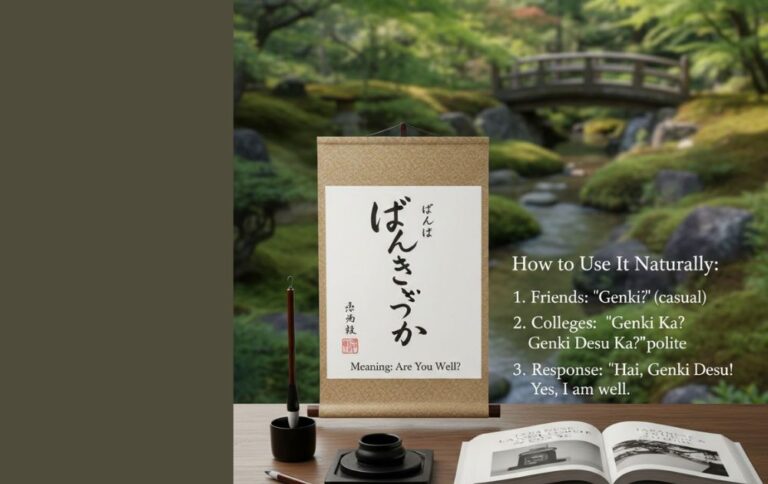
If you are learning Japanese, you may often hear genki desu ka in anime, travel videos, or daily conversations. The genki desu ka meaning is “How are you?” but it sounds more caring in Japanese. People commonly reply with hai genki desu or genki desu.
In polite situations, Japanese speakers use ogenki desu ka, which shows respect and kindness. Understanding the ogenki desu ka meaning helps you speak more naturally. Knowing when to say genki desu ka, hai genki desu, or genki desu makes your Japanese sound friendly and real.
What Does “Genki Desu Ka” Mean? The Complete Breakdown
The phrase genki desu ka is a common Japanese greeting that means “How are you?” The deeper genki desu ka meaning focuses on health, energy, and feelings. People often answer politely with hai genki desu or simply genki desu.:
- 元 (Gen) – Means origin or foundation, showing the base of someone’s condition
- 気 (Ki) – Refers to energy, spirit, or mood in daily life
- 元気 (Genki) – Together, it means healthy, lively, or feeling good
- です (Desu) – A polite verb that keeps the sentence respectful
- か (Ka) – A question marker that turns the phrase into a polite question
When spoken politely, ogenki desu ka shows respect and care, especially toward elders or colleagues. Understanding the ogenki desu ka meaning helps learners respond naturally. Simple replies like hai genki desu or genki desu make conversations feel warm and genuine.
The Cultural Significance
In Japanese culture, genki desu ka shows real concern, not just a habit. Unlike casual greetings, the genki desu ka meaning focuses on health and emotions. People answer honestly with hai genki desu or genki desu, which builds trust.
Therefore, using ogenki desu ka adds respect and warmth, especially with elders or colleagues. Understanding the ogenki desu ka meaning helps learners communicate politely. As a result, replying with hai genki desu or genki desu feels sincere and culturally correct.
How to Respond to “Genki Desu Ka” – Formal vs. Casual
When someone asks “Genki desu ka?”, these are the usual and most natural ways people reply in everyday Japanese conversations.
Formal Responses:
- はい、元気です。
Hai, genki desu.
Yes, I am well. - おかげさまで、元気です。
Okagesama de, genki desu.
I’m doing well, thank you. - まあまあ元気です。
Maa maa genki desu.
I’m doing fairly well. - あまり元気ではありません。
Amari genki dewa arimasen.
I’m not feeling very well. - 少し疲れていますが、元気です。
Sukoshi tsukarete imasu ga, genki desu.
I’m a bit tired, but I’m well.
Casual Responses with Friends:
When close friends ask genki desu ka, people usually reply in a relaxed way. They drop polite words and speak casually. Short answers feel more natural and friendly in everyday conversations.
- 元気!
Genki!
I’m good! - 元気だよ。
Genki da yo.
I’m doing well. - 元気じゃない。
Genki ja nai.
I’m not feeling great. - まあね。
Maa ne.
So-so.
Natural Conversation Examples Using “Genki Desu Ka”
Now let’s look at how genki desu ka is actually used in everyday Japanese conversations.
Example 1: Meeting a Colleague
田中: 山田さん、お元気ですか?
Tanaka: Yamada-san, o-genki desu ka?
Tanaka: Mr. Yamada, how are you today?
山田: はい、元気です。田中さんは?
Yamada: Hai, genki desu. Tanaka-san wa?
Yamada: Yes, I’m well. And you, Mr. Tanaka?
田中: お陰様で元気です。
Tanaka: Okagesama de genki desu.
Tanaka: Thanks to you, I’m doing well.
Example 2: Casual Friends Meeting
アキラ: ユミ、元気?
Akira: Yumi, genki?
Akira: Hey Yumi, how’s it going?
ユミ: うん、元気!最近どう?
Yumi: Un, genki! Saikin dou?
Yumi: Yeah, I’m good! How have you been lately?
アキラ: まあまあかな。でも元気だよ。
Akira: Maa maa kana. Demo genki da yo.
Akira: So-so, but I’m fine.
Example 3: Asking About Someone Else
先生: 山本さんのお母さんは、お元気ですか?
Sensei: Yamamoto-san no okaasan wa, o-genki desu ka?
Teacher: How is Mrs. Yamamoto doing?
山本: はい、とても元気です。ありがとうございます。
Yamamoto: Hai, totemo genki desu. Arigatou gozaimasu.
Yamamoto: Yes, she’s very well. Thank you for asking.
先生: よかったです。
Sensei: Yokatta desu.
Teacher: That’s good to hear.
Beyond “Genki Desu Ka”: Alternative Ways to Ask How Someone Is
Sometimes, instead of genki desu ka, Japanese speakers use other expressions to ask how someone is. These alternatives sound natural in different situations and relationships, helping you connect politely and genuinely. Using ogenki desu ka meaning correctly improves your Japanese conversation skills.
- 調子はどうですか? (Choushi wa dou desu ka?) – How are you feeling? / How’s it going?
- 最近どうですか? (Saikin dou desu ka?) – How have you been lately?
- 変わりないですか? (Kawari nai desu ka?) – Any changes? / Everything still the same?
- お変わりありませんか? (O-kawari arimasen ka?) – Have there been any changes? (more polite)
Using these alternatives naturally alongside genki desu ka and hai genki desu shows respect and care. They also help make your Japanese conversations smoother, more friendly, and culturally appropriate in both casual and formal settings.
Cultural Tips for Using “Genki Desu Ka” Appropriately
Knowing the right time and way to say genki desu ka depends on understanding Japanese culture and social etiquette.
- First Meetings vs. Regular Encounters: Use genki desu ka when meeting someone you already know. For first-time introductions, say hajimemashite instead to show proper manners.
- Consider the Timing: If you just saw the person recently, asking ogenki desu ka meaning might feel strange. In such cases, greetings like otsukaresama desu are more suitable.
- Respect Age and Status: Always adjust your speech based on the other person’s position. Use o-genki desu ka with seniors, teachers, or higher-ranking colleagues to show politeness.
- Watch Regional Differences: Different regions in Japan may have unique expressions. Knowing local variations helps you use genki desu ka naturally and avoid awkward situations.
- Pay Attention to Body Language: Japanese greetings often include bowing. Match your bow and tone with the level of formality when saying genki desu ka to show respect and sincerity.
Mastering “Genki Desu Ka” – Tips for Language Learners
To feel confident using genki desu ka and other common Japanese greetings:
- Practice with Audio Resources: Listen to native speakers saying genki desu ka and hai genki desu. This helps you learn correct pronunciation, intonation, and natural speech patterns.
- Role-Play Conversations: Practice asking and responding to ogenki desu ka meaning in different situations. Role-playing with a friend improves confidence and fluency.
- Observe Body Language: Notice how Japanese people bow or gesture when saying genki desu. Matching body language makes your greetings more natural and polite.
- Learn Common Kanji: Understanding kanji like 元気 (genki) helps you read and write greetings properly. Recognizing characters strengthens overall Japanese comprehension.
- Use Real-Life Situations: Try using genki desu ka in daily life, phone calls, or emails. Real interactions reinforce memory and cultural understanding.
When To Use “Genki Desu Ka” – Context Is Everything
Knowing when to say genki desu ka is key to sounding natural in Japanese. Using ogenki desu ka meaning correctly depends on the situation, relationship, and timing. This ensures your greetings feel polite, friendly, and culturally appropriate.
- After Not Seeing Someone: Use genki desu ka when meeting someone you haven’t seen for a while. It shows genuine care and interest in their wellbeing.
- During Phone Calls: When calling friends, family, or colleagues, asking ogenki desu ka meaning at the start of the conversation is polite and warm.
- Checking on Someone Who Was Ill: If someone was sick, asking genki desu ka demonstrates concern for their health and shows thoughtful manners.
- Emails or Letters: In written communication to friends or colleagues you haven’t contacted recently, using genki desu ka adds a friendly, respectful touch.
Using genki desu ka in the right situations makes your Japanese more natural. It shows you care, respect cultural norms, and helps build stronger personal and professional connections.
Ready to Take Your Japanese to the Next Level?
Learning Japanese goes beyond memorizing phrases like genki desu ka. To speak naturally, you need to understand cultural context, proper responses like hai genki desu, and when to use ogenki desu ka meaning. Practicing regularly helps you feel confident and connect with native speakers.
Next, try using greetings in real conversations. Role-play with friends or listen to audio examples to master pronunciation and tone. By observing gestures, bowing, and polite expressions, you make your use of genki desu ka feel authentic and culturally appropriate.
Finally, explore more practical phrases and everyday expressions. Combining genki desu ka with alternatives like saikin dou desu ka or choushi wa dou desu ka expands your conversation skills. With patience and practice, you’ll speak Japanese confidently and naturally in any situation.
Common Questions About “Genki Desu Ka”
Q: Is it rude to ask “genki desu ka” to someone you just met?
Yes, asking genki desu ka at first meetings can feel awkward. Use hajimemashite instead, saving ogenki desu ka meaning for people you already know.
Q: How often can I use “genki desu ka” with the same person?
Typically, genki desu ka is used when you haven’t seen someone for a while. Daily use might seem unnatural, even with friends or colleagues.
Q: What’s the most natural response to “genki desu ka”?
A simple hai, genki desu works best. For casual situations, genki! is friendly, while polite settings can use ogenki desu ka meaning appropriately.
Q: Is “genki desu ka” used in business settings?
Yes, in formal contexts, use o-genki desu ka to check colleagues’ wellbeing. It’s polite, professional, and shows respect in workplace interactions.
Q: Can “genki desu ka” be used for someone else’s health?
Absolutely! You can ask about another person using ogenki desu ka meaning, showing care and politeness when inquiring about family or friends.
Conclusion
Mastering genki desu ka and understanding ogenki desu ka meaning is more than memorizing words, it helps you connect genuinely with others in Japanese culture. Using hai genki desu or casual genki desu responses appropriately shows respect, care, and friendliness.
By practicing in real-life situations, paying attention to timing, and observing cultural norms, you can use this simple greeting naturally. Whether speaking with colleagues, friends, or asking about someone else, genki desu ka becomes a bridge to meaningful conversation. Keep practicing, and soon your Japanese greetings will feel confident, polite, and authentic.

