
Have you ever seen the word oyasumi and wondered what it really means? Many people hear it in Japanese dramas, anime, or daily conversations, but they are not sure how to use it correctly.
Simply put, the oyasumi meaning is “goodnight,” yet it carries more warmth and care than a simple farewell. It is often used before sleeping or when parting late at night. However, context matters in Japanese culture, and using the right form shows respect.
As you read on, you’ll discover the true oyasumi meaning and learn how to use it confidently in real-life situations. Moreover, understanding this small word can help you sound natural and polite when speaking Japanese.
What Does Oyasumi Mean in Japanese?
In Japanese, the word oyasumi is commonly used to say “goodnight.” It comes from the verb yasumu, which means to rest or sleep. Because of this, oyasumi feels calm and caring, not rushed. People often say it before going to bed or when ending a late-night conversation.
The oyasumi meaning in Japanese goes beyond a simple translation. It shows kindness and concern for someone’s rest. For example, when parents say it to their children, it sounds gentle and loving. Likewise, friends use it to wish each other peaceful sleep.
To use oyasumi correctly, timing matters. It fits best at night, especially when someone is about to sleep.
The Origins and Cultural Context of Oyasumi
The word oyasumi is part of a group of basic Japanese greetings that people use every day. These greetings help speakers communicate politely based on the time of day. Just like English has different words for morning and night, Japanese follows a similar pattern.
In daily life, Japanese greetings change as the day moves forward:
- おはようございます Ohayou gozaimasu – used in the morning
- こんにちは Konnichiwa – used during the daytime
- こんばんは Konbanwa – used in the evening
- おやすみ Oyasumi – used at night before sleeping
There is also a more polite form called oyasuminasai. It includes an extra ending that adds respect and care. Because of this, it is often used with elders, teachers, or in formal situations to politely wish someone a good rest.
When and How to Use Oyasumi Correctly
Using oyasumi at the right time helps you sound natural and polite in Japanese. This phrase is mainly connected to rest and sleep, so timing is very important. Let’s break it into two common situations so it’s easy to understand.
Before Sleeping
The most common time to say oyasumi is right before going to bed. People say it to family members, friends, or even while texting at night.
It works like saying “goodnight” after turning off the lights. For example, when someone says they are going to sleep, replying with oyasumi feels warm and caring.
When Parting Late at Night
You can also use oyasumi when saying goodbye late at night, even if you are not sleeping yet. For instance, after a long day at work or study, people say it when heading home.
In polite settings, oyasuminasai sounds more respectful and thoughtful.
Formal vs. Casual: Understanding the Difference
Oyasumi vs. Oyasuminasai
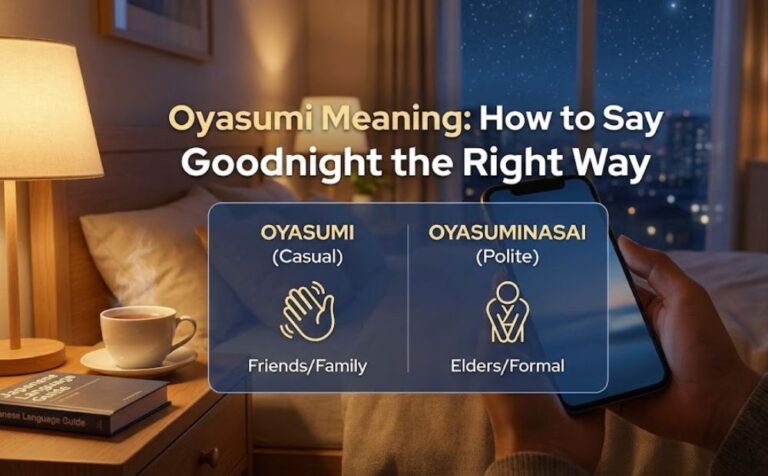
In Japanese, the way you speak changes based on who you are talking to. This is why there are two forms of saying goodnight. Oyasumi is the casual version. People use it with close friends, siblings, or family members. It sounds friendly and relaxed, just like talking to someone you know well.
On the other hand, oyasuminasai is the polite and formal form. It shows respect and care. People usually say it to teachers, elders, supervisors, or anyone they want to speak to politely. It feels similar to saying “please rest well” instead of a simple “goodnight.”
A simple way to remember this is:
- Oyasumi → casual, friendly, everyday use
- Oyasuminasai → polite, respectful, formal situations
Choosing the right one helps you communicate clearly and respectfully.
Beyond Bedtime: Other Uses of Yasumu
The word yasumu is not only connected to sleep. In Japanese, it has a broader meaning related to rest, breaks, and time away from work. Understanding this helps you see why oyasumi feels so natural and meaningful in daily conversations.
Taking Time Off
Yasumu is often used when someone takes a break, holiday, or day off. For example, a shop may say it is closed for the day.
This usage shows that rest is respected and clearly communicated in Japanese culture.
Indicating Absence
The same word is also used to explain someone’s absence. If a coworker or manager is not at work, people may say they are “yasumi,” meaning they are off today.
This keeps communication polite and simple.
Common Alternatives in Formal Settings
In formal or professional situations, using oyasuminasai is appropriate, but sometimes other polite phrases are better suited. These alternatives help you show respect while acknowledging someone’s efforts or saying goodbye at night.
Some common alternatives include:
- お疲れ様でした (Otsukaresama deshita) – “Thank you for your hard work today”
- 今日はありがとうございました (Kyou wa arigatou gozaimashita) – “Thank you for today”
- 失礼します (Shitsurei shimasu) – “Excuse me” or “I’ll take my leave”
These phrases are often used in workplaces, schools, or formal gatherings. Using them alongside oyasuminasai ensures your Japanese sounds polite, thoughtful, and culturally aware.
Tips for Learning Japanese Greetings
Learning Japanese greetings like oyasumi can be fun and easy if you follow a few simple steps. First, practice saying them out loud. This helps you remember the pronunciation and sound natural when speaking.
Next, pay attention to context. Greetings change depending on the time of day, your relationship with the person, and the level of politeness. For example, use oyasumi with friends or family and oyasuminasai with teachers or seniors.
Finally, immerse yourself in real examples. Watch Japanese dramas, anime, or videos to hear greetings in action. Repeating them in daily life and pairing them with actions, like waving or bowing, makes learning easier and helps you sound confident.
Expanding Your Japanese Vocabulary
To speak Japanese naturally, it’s important to go beyond greetings like oyasumi. Start by learning common words and phrases used daily, such as numbers, question words, and polite expressions.
Next, practice combining them in sentences. For example, pair greetings with simple responses like “thank you” or “see you tomorrow.”
Finally, immerse yourself in Japanese media, like anime, dramas, or podcasts, to hear vocabulary in context. This helps you remember words faster and use them correctly. Gradually, your confidence will grow, and everyday conversations will feel easier and more natural.
Final Thoughts: The Importance of Oyasumi in Japanese Culture
The word oyasumi is more than just a way to say “goodnight.” In Japanese culture, it reflects respect, care, and thoughtfulness toward others. Using it correctly shows that you value someone’s rest and well-being.
Whether you are speaking to family, friends, or colleagues, choosing the right form—oyasumi for casual situations and oyasuminasai for formal ones—demonstrates cultural awareness.
Mastering this simple greeting helps you communicate politely and naturally. It also gives insight into Japan’s emphasis on rest and harmony, making your language skills more authentic and meaningful in daily interactions.
What Does TM Mean in Text: What It Really Means and When to Use It
FAQ: Common Questions About Oyasumi
What is the literal meaning of oyasumi?
Literally, oyasumi means “honorable rest” or “honorable sleep.” It comes from the verb yasumu (to rest or sleep) with the polite prefix “o-,” showing care and respect.
How do you pronounce oyasumi correctly?
It is pronounced oh-yah-soo-mee, with a slight emphasis on the “ya” syllable. Speaking it slowly and clearly helps sound natural.
Can I use oyasumi when leaving work?
Yes, but only if it’s late at night and people are heading home to sleep. Otherwise, phrases like otsukaresama deshita are more suitable.
Is it rude to say just oyasumi to my Japanese teacher?
Yes. With teachers or superiors, use the polite oyasuminasai to show respect.
What time of day is appropriate to start using oyasumi?
Typically, oyasumi is used in the evening when someone is going to bed or when parting late at night, usually after 9 or 10 PM.

